
Why the same gold has two naira prices
The table above this text shows the same gram of gold priced twice: once using the Central Bank of Nigeria’s official dollar rate, and once using the Lagos street dollar rate. The world gold price is in US dollars. To express that price in naira, a conversion rate must be chosen. Nigeria has two commonly used rates, and the choice of rate changes the naira figure for the same gram of gold.
One ounce, two dollars
One gram, ten grams, an ounce and a kilogram of 24 karat gold at the official dollar and at the street dollar, and the difference.
| Weight, 24K | At the official dollar | At the street dollar | Difference |
|---|---|---|---|
| 1 gram | ₦170,563 | ₦176,517 | ₦+5,954 |
| 10 grams | ₦1,705,630 | ₦1,765,173 | ₦+59,543 |
| 1 troy ounce | ₦5,305,101 | ₦5,490,302 | ₦+185,200 |
| 1 kilogram | ₦170,562,965 | ₦176,517,292 | ₦+5,954,327 |
Priced on: 02.11.2026
What each column shows
The first column shows the weight or karat. The next columns show the naira price at the CBN official dollar rate. The following columns show the naira price at the Lagos street dollar rate. The two prices differ because the two dollar rates differ.
The table does not claim that either rate is the right one. It shows both, because a buyer in Nigeria may face either depending on how the transaction is settled.
A person buying gold locally in cash is more likely to face the street rate. Cash dollars in Lagos change hands at the street rate, not the official rate. A dealer who buys dollars in cash to restock gold will price the gold using the street rate.
An importer settling through a bank faces the official rate. A bank transfer for an import is settled at the official rate, so the importer’s cost is based on that rate.
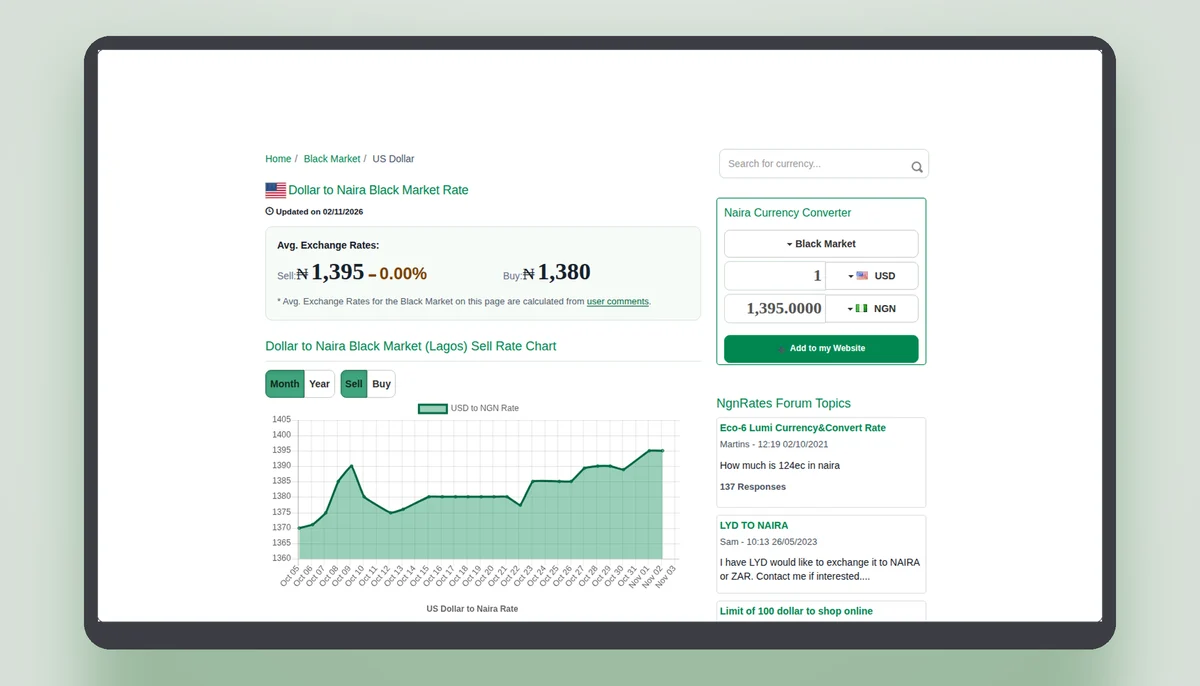
The official rate is the Central Bank of Nigeria’s volume-weighted NFEM rate, published on the CBN’s website. It is used for formal transactions, such as imports and exports. The street rate is the Lagos sell average posted on NgnRates.com, which aggregates dealer quotes submitted by users.
The street rate is a reported rate, not a survey. It may be based on one dealer’s quote per side, and it may not reflect the rate available in other cities. The official rate is more stable but lags the street rate when the naira is under pressure.
The gap between the two naira prices is a currency effect, not a difference in the metal. The same gram of gold is worth the same in dollars; it is the naira rate that changes the figure. The gap can be several per cent, which is often larger than a single day’s movement in the world gold price.
A buyer should ask a dealer which dollar rate is behind the quote. The answer will show whether the dealer is using the official rate or the street rate, and it will explain why the quote differs from the table.
The table does not show a spread, a making charge, or a buy-back deduction. Those costs are set in the market between buyer and seller. The table shows the metal value before those costs are added, at each of the two dollar rates.
The table is a reference, not a price list. A dealer’s quote will include additional costs, and the dealer may use a different dollar rate than either of the two shown.
A reader should not conclude that one rate is the right one. The official rate is used for formal transactions, and the street rate is used for cash transactions. A buyer in Lagos paying cash is likely to face the street rate. An importer settling through a bank faces the official rate. The table shows both, so the reader can see the range.
At a glance
Read next
Questions about the gold price
Why does the same gold have two naira prices?
The world gold price is in US dollars. To express it in naira, a conversion rate must be chosen. Nigeria has two commonly used rates: the Central Bank of Nigeria’s official rate and the Lagos street rate. The choice of rate changes the naira figure for the same gram of gold.
Which dollar rate will a dealer in Lagos use?
A dealer in Lagos selling for cash is more likely to use the street rate, because that is the rate at which dollars change hands in cash transactions. An importer settling through a bank faces the official rate. A buyer should ask the dealer which rate is behind the quote.
Is one rate the right one?
No. The official rate is used for formal transactions, and the street rate is used for cash transactions. Neither is right or wrong; they are different rates for different situations. The table shows both, so the reader can see the range.
Why is the gap between the two prices often large?
The gap between the two naira prices is a currency effect. The same gram of gold is worth the same in dollars; it is the naira rate that changes the figure. The gap can be several per cent, which is often larger than a single day’s movement in the world gold price.
Does the table show a dealer’s spread?
No. The table shows the metal value before any spread, making charge, or buy-back deduction. A dealer’s quote will include additional costs, and the dealer may use a different dollar rate than either of the two shown.
If you want to trade the gold price itself
This site links to an account with FxPro, an international broker. Gold is quoted there as a contract for difference, which means no metal is delivered, weighed or stored. The account is not a way to buy gold in Nigeria; it is a way to take a position on the world price in dollars. Opening an account requires identification and takes a day or two.